Our Mission
Slow & Steady Farm’s mission is to feed our community and country with clean, delicious food.
There’s nothing more valuable than a home-grown tomato.
Pick it from the vine in the sun and its warm juicy summer flavor cannot be replicated. It’s one of life’s simplest pleasures… yet it’s not really that simple is it?
Not a single tomato in a grocery store ever tastes like that. The commercialization of food has so demanded grocery stores are constantly stocked three feet high with tomatoes, that it has sacrificed the tomato itself in the process.
It begs the question… what is even the point?
This same commercialization of food has spread chemical after chemical on our foods. Azatrine. Glyphosate. Boscalid. Pyraclostrobin. Fludioxonil.
The list goes on and on.
The same food system that hands you a tasteless tomato picked green and ripened on a truck, also coats the tomato in pesticides and fungicides like Chlorothalonil, Malathion, Spinosad, Permethrin, and Copper (a heavy metal). Then they fertilize with synthetic fertilizers, whose derivatives are largely sold by foreign oil suppliers.
There is a better way.
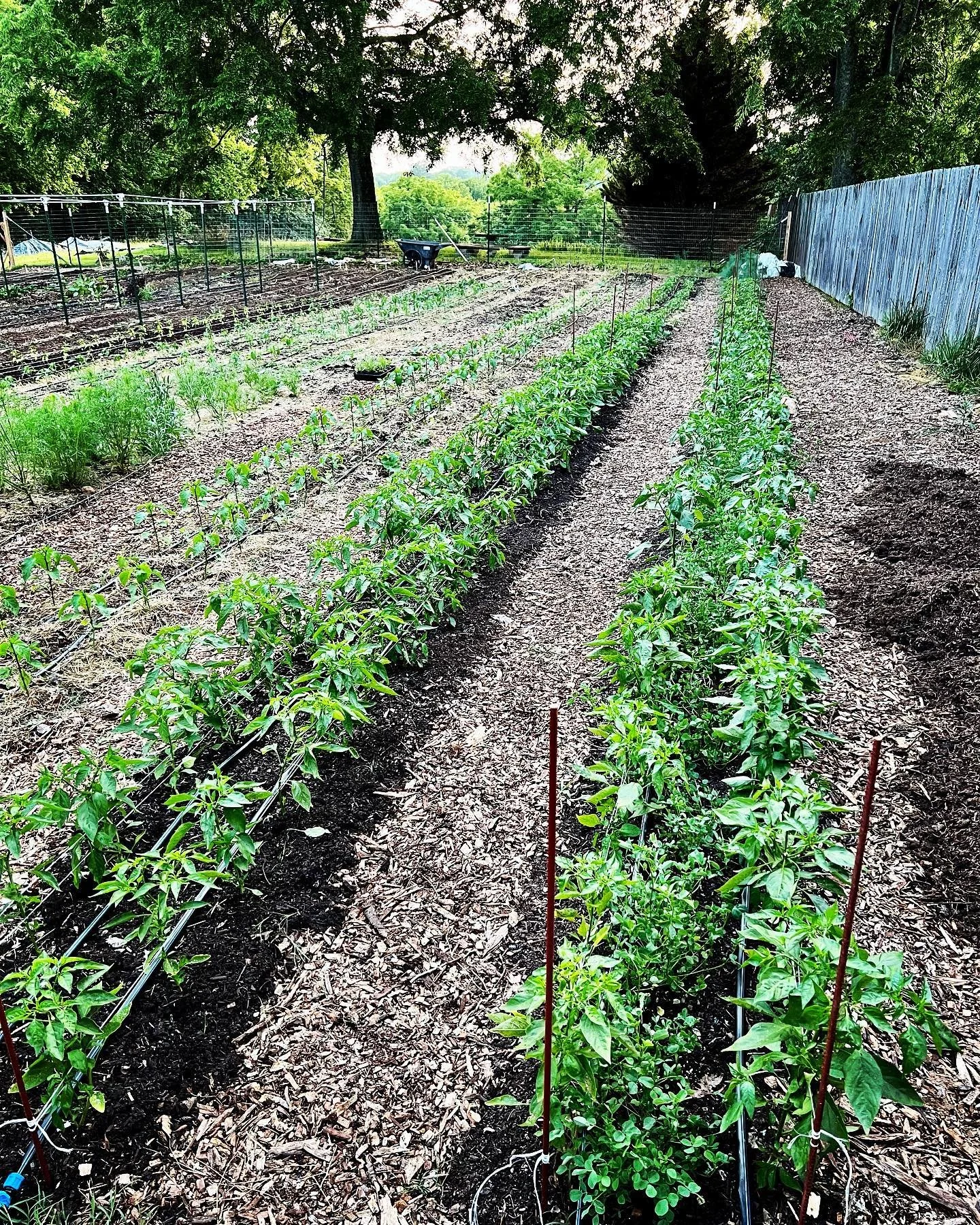
The better way is regenerative agriculture. Regenerative agriculture builds the local soil health and fertility by increasing biodiversity, increasing organic matter, and focusing on sequestering carbon.
No-tilling or plowing, organic matter-rich fertilizers sourced from the USA and our own farm, cover cropping, and animals on pasture.
These practices keep our soil life robust and biodiverse, which builds strong plants. Strong plants, like humans, fight off diseases better and bounce back from damage faster.
With well fertilized and well drained soil rich in organic matter, you simply won’t need to spray pesticides or fungicides. With proper cover cropping and soil management, you won’t need to spray herbicides to kill weeds.
In 2025, many pepper growers in Tennessee had pepper blight / pepper leaf spot issues. We had this issue as well, but it did not cause any harvest loss. We kept it in check by fertilizing with potassium derived from langbenite (a mineral). This gave the plants an extra boost of nutrients helping them fight back against the leaf spot.
If you’ve made it this far, thank you very much. Please reach out to us if you have any questions or concerns. We love meeting folks who care about high quality food <3